I Googled India’s Top Business Coaches. Apparently, Women Didn’t Make the Screenshot.
By Bhavya Kalsi, Co-founder of Be Marketing Coaches
I Googled “top business coaches 2026 India.”
I didn’t type “male.” I didn’t ask for a gentleman to explain profit margins to me. Just business coaches.
Every name visible in the response was a man.
Now, before somebody arrives to explain search algorithms: yes, I know. One screenshot is not an industry census. These men may be excellent coaches. This isn’t an argument about whether they deserve to be there.
I’m asking why women are so easily missing from the picture. And I’ll be honest: I want my name on that list.
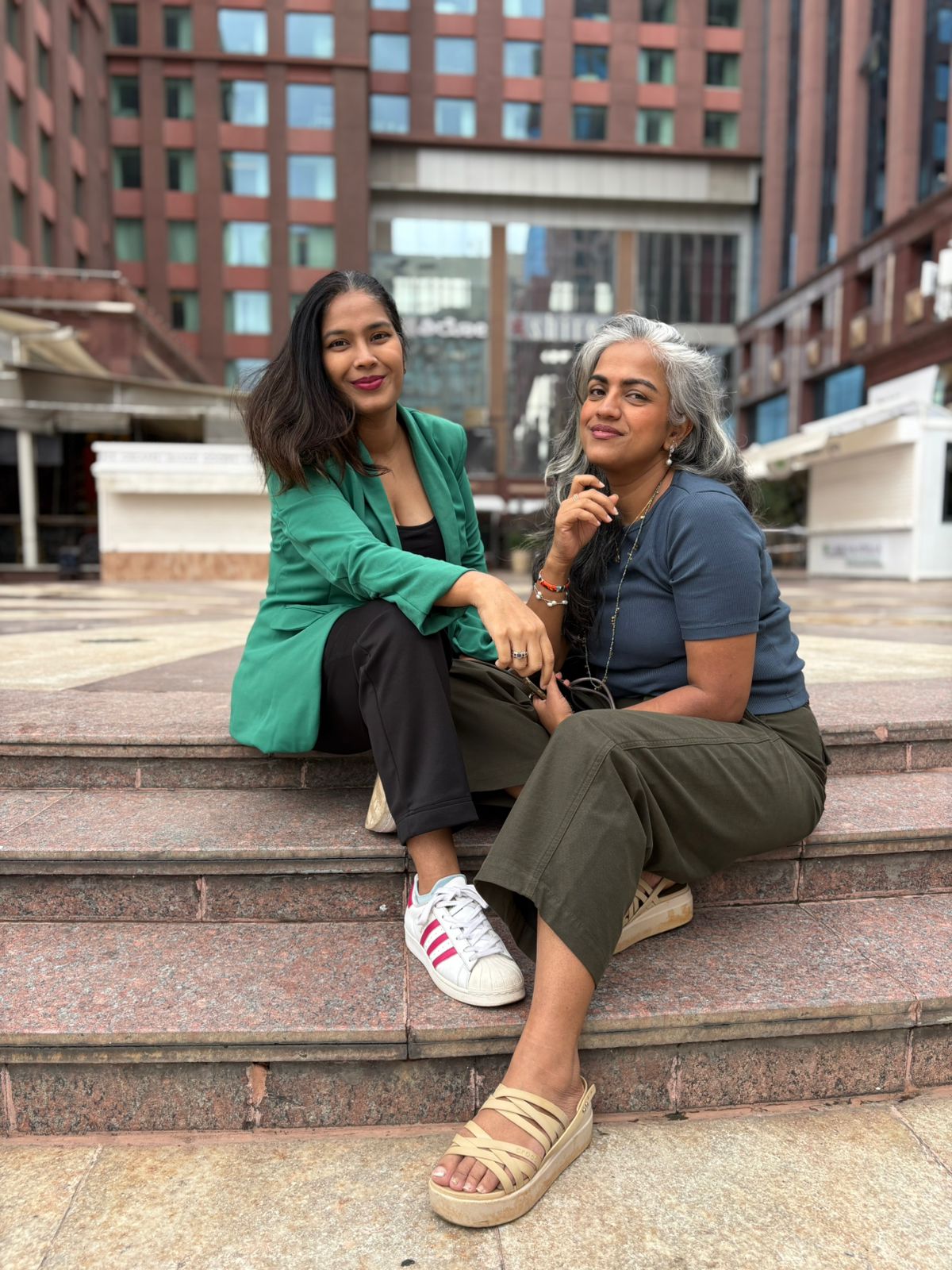
I’m Bhavya Kalsi. My sister, Nimisha Kalipurayath, and I co-founded Be Marketing Coaches. We work with women entrepreneurs on business strategy, positioning, pricing, marketing and sales.
Our ambition? To make Be Marketing Coaches the first name women in India think of when they need a business coach.
Which brings me to the question people keep asking: “Why women? Isn’t business gender neutral?”
Absolutely fucking true. The maths is.
A spreadsheet doesn’t have a gender. The person trying to find time to open it has a life.
There is no women’s version of a profit margin. No female sales funnel. I spent years in advertising and marketing before building businesses of my own. I’m perfectly aware that the fundamentals don’t change according to who is sitting in the chair.
But what happens around that chair matters.
Who gets uninterrupted time to work? Whose meeting gets cancelled when a child is sick? Whose business is treated as something that can wait? Who can spend an evening networking without first organising dinner, childcare and a small diplomatic mission?
We do not build businesses in sterile laboratories where everybody has identical resources, responsibilities and starting conditions.
We build them in the middle of our lives. Messy, demanding, culturally complicated lives.
So when somebody says, “We all have the same 24 hours,” I want to know how many of those hours they actually own.
India’s 2024 Time Use Survey found that, among people aged 15–59 participating in unpaid domestic work, women spent an average of 305 minutes a day on it. Men spent 86. Roughly five hours versus an hour and a half, with caregiving measured separately.
You cannot give someone back those hours with a motivational quote about discipline.
Why business coaching for women needs to account for more than the business
A lot of the women we work with are in their thirties and forties. They have skills, experience and ambition. They want to make proper money and have some financial autonomy.
They also grew up absorbing a fairly exhausting set of instructions.
Be educated. Be capable. Earn money. But remain accommodating. Don’t become too demanding. And whatever you do, make sure your ambition doesn’t inconvenience anybody.
Then they start businesses, and suddenly the instructions change.
Be visible. Sell confidently. Set boundaries. Charge more. Stop caring what people think.
Sorry, were we supposed to uninstall thirty years of conditioning when we bought the domain name?
That conditioning can show up in very practical places. A proposal with three extra deliverables nobody is paying for. A price increase accompanied by an apology essay. A client who gets instant responses while the founder’s own marketing keeps getting postponed.
These things affect profitability. They affect capacity. They affect whether a business can grow without consuming the woman running it.
Taking them seriously is part of doing the business work properly.
Of course, women’s circumstances differ. Support, money, family structure and caring responsibilities all matter. That is precisely why good coaching needs to understand the person implementing the strategy.
Gender gives us relevant context. It doesn’t give us permission to make assumptions about every woman.
What we actually work on at Be Marketing Coaches
Nimisha and I help women entrepreneurs turn their expertise into a business people understand, buy from and come back to.
That means getting clear on who they serve, what they sell, how they price it, how they become known and how interest turns into paying clients.
And then we ask whether that business works inside the life they actually have.
If a woman has four reliable working hours a day, that affects her delivery model. If everything requires her personal attention, that affects her capacity. If she is selling more but keeping less, we need to examine her pricing, costs and scope.
If every new client makes her life worse, “get more clients” is a spectacularly incomplete strategy.
I know how easy it is to build something that looks successful from the outside and quietly eats the freedom you started it for. After five businesses, I have earned a healthy suspicion of growth that only works when the founder keeps absorbing the cost.
When I say “build a business around your life,” I mean we need to design for it. In the offer. In the calendar. In the numbers. In what customers can reasonably expect from you.
Freedom needs a business model.
My daughter gets a different starting point
My daughter is growing up watching her mother build businesses, make decisions, charge money, change direction and have opinions out loud.
Some of what she gets to consider normal, I had to learn to give myself permission for.
She has that privilege because I went through the shit.
And I’m glad. I want her starting point to be further ahead than mine was. I want her to spend less time wondering whether she is allowed and more time deciding what she wants to do.
But the women building businesses today cannot wait for another generation’s expectations to improve.
They need to make money now. They need a viable offer now. They need to understand their numbers, attract customers and stop treating their own income as the optional part of the household plan.
That is the work we care about.
Yes, I want us on that list
I’m not going to write an entire article about women owning their ambition and then become coy about mine.
I want Bhavya Kalsi and Nimisha Kalipurayath to be names people recognise in business coaching. I want Be Marketing Coaches to be considered when someone searches for the best business coach for women in India.
And I want that recognition to be backed by the quality of our work: clearer businesses, stronger commercial decisions, better boundaries and clients who can explain how their business and their life have changed.
Women should be visible as business authorities. Women building businesses should also be able to find expertise that takes their circumstances seriously.
So yes, we coach women in business. We understand the fundamentals, and we care about what it takes to apply them in the real world.
The spreadsheet can stay gender neutral. The strategy needs to account for her life.
If you’re a woman entrepreneur ready to build a clearer, more profitable business around your life, explore working with Be Marketing Coaches.